
Understanding Tattnall County Releases
A release means that one custody authority ended its hold on a person. It does not always mean the person went home. Someone can bond out, complete a county sentence, leave under a court order, receive release after dismissal, transfer to GDC, move to another county, or pass to federal or immigration custody. A state prisoner may leave on parole, reach maximum sentence expiration, move through a transitional center, or discharge without supervision. The record must be read in that setting.
Tattnall County Jail is run by the Sheriff's Office. Rogers State Prison and Smith State Prison are GDC facilities. Georgia State Prison is closed but still produces historical searches. These systems do not share one complete public release list. The county inquiry may mark a past booking RELEASED, GDC may show state status and a release date, a court can hold the order behind the change, and parole or DCS can show supervision after prison.
- Release
- The end of custody by a particular agency.
- Discharge
- Formal completion of custody or supervision.
- Parole
- Conditional community release before sentence expiration.
- Probation
- Court-ordered community supervision, sometimes following jail time.
- Detainer
- A request or hold that can send a person to another authority.
Tattnall County Release Paths
The next record depends on the legal path out. A sheriff record is best for the actual county jail exit. A court record often explains why it happened. GDC and parole records control state-prison outcomes.
| Release path | Meaning | Next source |
|---|---|---|
| Bond or recognizance | Local custody ends under release terms. | Sheriff release record and court docket |
| Time served or sentence completion | The local term expires, subject to earned time and holds. | Sheriff and sentencing court |
| Court order or dismissal | A filed action authorizes or explains release. | Court docket and jail exit record |
| Transfer | County custody ends while another agency takes custody. | Receiving sheriff, GDC, BOP, ICE, or court |
| Parole | Prison custody ends under Board-approved supervision. | GDC, Parolee Search, and DCS |
| Max-out or discharge | The state sentence or supervision reaches formal completion. | GDC or supervising agency record |
A status label alone cannot choose among these paths. It should be paired with the charge, court, custody agency, and a produced record when exact proof is required.
Tattnall County Release Record Fields
A full release record answers more than whether a name vanished from the roster. Tattnall's public inquiry exposes a partial booking trail. It shows status, arrest date, days in jail, bond, agency, warrant, statute, charge description, and court, but its visible text does not show a field named release date or reason. Those missing facts require the custodian.
| Field | What it establishes |
|---|---|
| Name and booking tie | Connects the release to the correct custody event. |
| Release date and time | States when that agency ended custody. |
| Release type or authority | Explains bond, order, sentence completion, dismissal, parole, or transfer. |
| Releasing facility | Separates county jail from state or federal custody. |
| Destination | May show community release or transfer to another authority. |
| Supervision | Identifies parole, probation, or another duty after custody. |
A row marked RELEASED supports only a limited statement: that booking is no longer current in the county inquiry. It does not establish the exact exit hour, reason, or later custody.
Request Tattnall County Release Records
The Tattnall open-records page says a request should go to the custodian of the record sought. It may be oral or written, though the county recommends writing to document scope and timing. Charges can apply based on the record, and the requester will be contacted before processing when they do.
- Identify the custodian: sheriff for jail data, clerk for filed court records, or GDC for state-prison data.
- Give the full name, arrest or booking date, location, case number, warrant number, and other known identifiers.
- Ask for specific fields: booking sheet, release date and time, authority, type, destination, and public bond or disposition information.
- Request a booking photograph only if needed and legally releasable.
- Keep the response and compare it with the court or receiving-agency record when transfer is possible.
The Sheriff's Office is the local confirmation point and lists 912-557-6778. Court documents belong with the clerk. GDC tells readers to verify offender information through written correspondence with Inmate Records and Information at P.O. Box 1529, Forsyth, GA 31029 when online data is incomplete or disputed.
Tattnall Release Records Law
The Georgia Open Records Act, O.C.G.A. 50-18-70 et seq., is the baseline. Public records are open for inspection and copying unless an exemption applies, and an agency withholding a record must identify its legal basis. The request must reach the actual custodian. Juvenile, sealed, restricted, and exempt material can be treated differently from an ordinary adult jail record.
O.C.G.A. 42-4-7 requires county inmate records and addresses release at sentence expiration less earned-time allowances. It does not authorize a public guess at one person's date. Sentence start, jail credit, earned time, discipline, court orders, consecutive terms, warrants, detainers, and transfers can all matter. A court restriction or sealing event may limit access without erasing every record held by every agency.
Find Released Tattnall County Inmates
Start with custody type, not a broad name search. Tattnall contains a county jail and two active state prisons, while old results still refer to the closed Georgia State Prison. The same name can therefore lead to records controlled by different agencies.
- Identify the last known facility or arresting agency.
- For Tattnall County Jail, enter the county inquiry and use 24 Hours Arrests or Inmates by Arrest Date, not only Current Inmates.
- Read the row's status. RELEASED is a clue; CURRENTLY BOOKED is active local custody.
- For Rogers, Smith, or another state prison, use GDC Find an Offender and compare identifiers.
- Check the court for bond, disposition, sentence, dismissal, or revocation records.
- Check parole, DCS, BOP, ICE, or the offender registry only when that system fits the case.
- Request the controlling release record if the public result lacks date, reason, or destination.
GDC Tattnall Release Search
GDC Find an Offender is the backbone for state-prison searches tied to Rogers and Smith. Georgia.gov says it accepts name, ID or case number, age, and other identifying information, and it directs county-jail searches back to the county. Accept the disclaimer, use the most precise fields available, open the matching record, and compare identifiers before reading status, facility, sentence, offense, and release information.
| Search field | Use |
|---|---|
| GDC ID | Most direct state offender identifier. |
| Case number | Connects the person to a state correctional case. |
| Full name | Broad entry point that needs identity checks. |
| Age, sex, race | Helps separate common-name results. |
| Offense and county | Provides a second match against known facts. |
| Status, facility, release date | Shows the state custody and release context. |
The parole board's Tentative Parole Month is not a final release order. It is a final-review timing point that can change. If state custody has ended, move to Parolee Search or DCS when supervision is expected. The GDC offender information source appears in this manifest image:
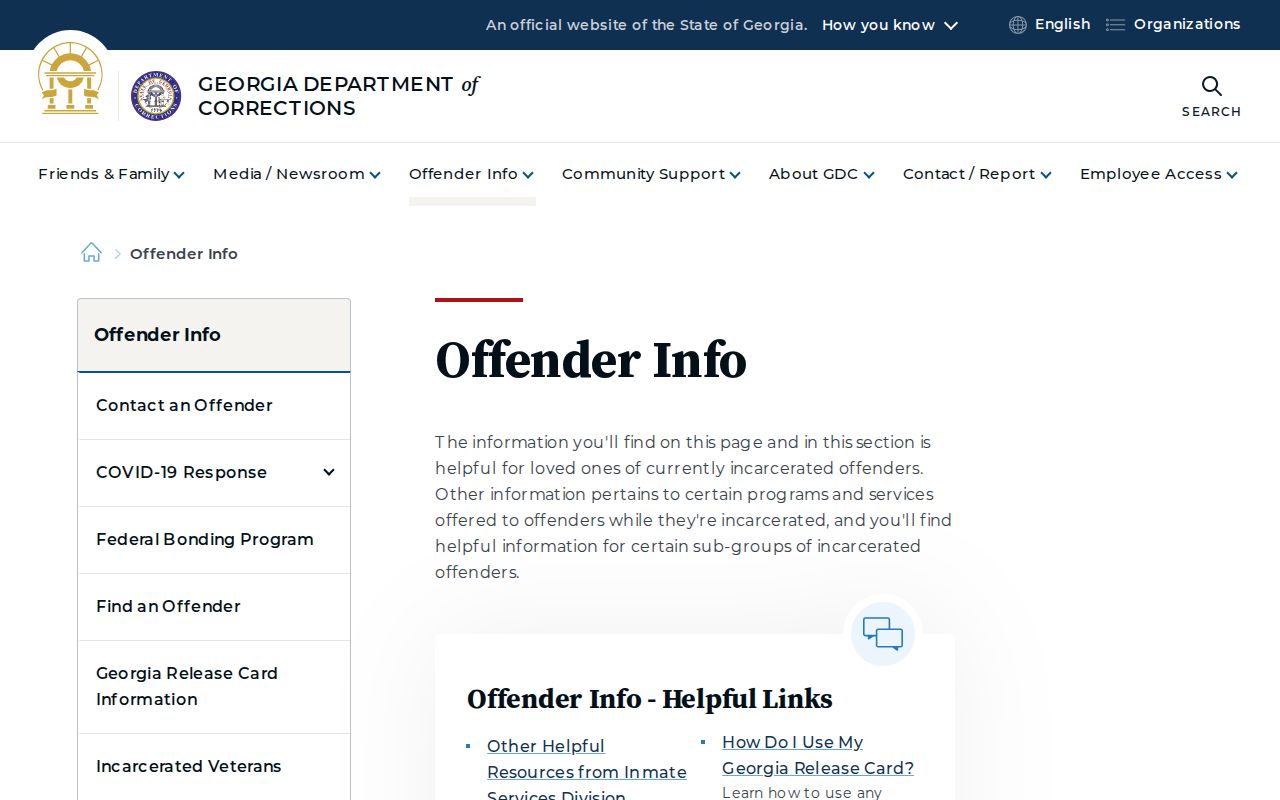
That source reinforces the boundary between state offender records and the local jail inquiry.
Tattnall County Recent Release Status
The county inquiry has Current Inmates, 24 Hours Arrests, and Inmates by Arrest Date. The 24-hour tab is headed Inmates Booked Last 24 Hours, so it is not a pure release feed. It can show a person already marked RELEASED. The date-range view can also preserve prior released rows. Neither visible page supplies a dedicated release-date field or a promised retention span.
Use status with care. CURRENTLY BOOKED means active local custody at the time of the data. RELEASED means the displayed county booking has ended. The label does not rule out transfer or supervision. No Tattnall sheriff mobile roster app was confirmed, so the verified public path is the county web inquiry and not an assumed app.
Tattnall Release Supervision Checks
Parole and probation are not the same. The Georgia State Board of Pardons and Paroles makes parole decisions and provides Inmate TPM and Parolee Search tools. DCS handles field supervision for parolees and felony probationers. The Claxton field office serves Tattnall County. A parole record can confirm that prison custody ended while state supervision continues.
A new jail row with probation-violation or parole wanted-person language may be a supervision event, not proof of a new conviction. Check the warrant, court, Parolee Search, and DCS rather than drawing a conclusion from the charge wording alone. Supervision ends by discharge or other controlling action, not merely because a person is absent from jail.
Tattnall Release Alerts and Transfers
Georgia VINE can provide custody-status notifications such as release, transfer, or escape where the reporting agency supplies data. It is an alert layer, not a full release record. Verify its result with the sheriff, GDC, court, or other custodian. The GBI registry is also not a general released-inmate list; it applies only to people subject to registration law.
The BOP locator covers federal records from 1982 forward. A past release date with no BOP location means the person left BOP custody, though another agency or federal supervision may follow. ICE's locator is separate. It can cover current ICE custody and recent releases within its stated scope. A county RELEASED label can reflect a handoff, so check the receiving system when a hold, detainer, wanted-person entry, or transfer appears.
Tattnall Release Search by Custody
Each public system answers a limited question. The quickest reliable route is to match source and custody type.
| Situation | Primary source | Meaning |
|---|---|---|
| Still in county jail | Current Inmates | Active Tattnall booking |
| Past county booking | 24-hour or arrest-date inquiry, then sheriff record | Released status plus formal proof |
| State prisoner or discharge | GDC Find an Offender | State facility, status, and release information |
| Parole or felony supervision | Parolee Search and DCS | Community supervision after custody |
| Federal custody | BOP locator | Federal location or past release date |
| Immigration custody | ICE ODLS | Separate immigration detention status |
| Legal reason for release | Court docket | Bond, dismissal, sentence, or order |
Tattnall County Release Facilities
Tattnall's corrections footprint makes facility identification essential. The county jail and state prisons can sit in the same search results while producing different records.
- Tattnall County Jail: local releases go to community, court-directed placement, or another authority.
- Rogers State Prison: state release is verified through GDC, parole, and DCS.
- Smith State Prison: state custody and discharge follow GDC channels.
- Georgia State Prison: closed February 19, 2022; historical questions go to GDC, court, and parole records.
- Smith Transitional Center: host-linked to Smith State Prison and part of a possible state reentry path.
- Municipal arrest pathways: bookings may enter the county jail, while citation-only cases stay in court records.
- BOP and ICE: separate systems when local custody ends by transfer.
Why Tattnall Release Searches Split
Tattnall County is unusually corrections-heavy for a small county. GDC lists Rogers State Prison in Reidsville and Smith State Prison in Glennville, while the Sheriff's Office operates the county jail. The county also identifies the former Georgia State Prison as closed. A query containing only “Tattnall” can therefore point to a short local jail stay, a long state sentence, a transitional move, or a historical prison record.
The practical rule is simple: geography does not decide custody. The operating agency does. Use the sheriff for county release facts and GDC for state prison facts. Then add the court, parole board, or DCS source needed to explain the legal outcome or ongoing supervision.
Tattnall State Release Reentry Path
Smith Transitional Center is in Claxton, Evans County, yet GDC identifies Smith State Prison as its host facility. That creates a regional route relevant to Tattnall searches: a person may leave Smith State Prison for transitional placement before full community release. The move is not a Tattnall County Jail release and should not be searched in the local current-inmate roster.
Track that path through the GDC offender record, parole information when applicable, and DCS supervision after release. Transitional placement is still within the state correctional framework. It should not be described as complete discharge unless the controlling record says so.
Tattnall Court Release Proof
Tattnall's roster makes the court trail important because RELEASED is visible while a release-date field is not. The Clerk of Superior Court maintains criminal dockets and court records. Georgia Courts E-Access lists Tattnall Superior among courts with electronic access through a provider account. A docket may preserve the bond order, sentence, revocation, dismissal, nolle prosequi, or other disposition behind a custody change.
The court record and jail record answer different questions. The court can show legal authority. The sheriff can show the actual booking and exit. When exact proof matters, use both. The Georgia court-access source is shown in the successful manifest capture:
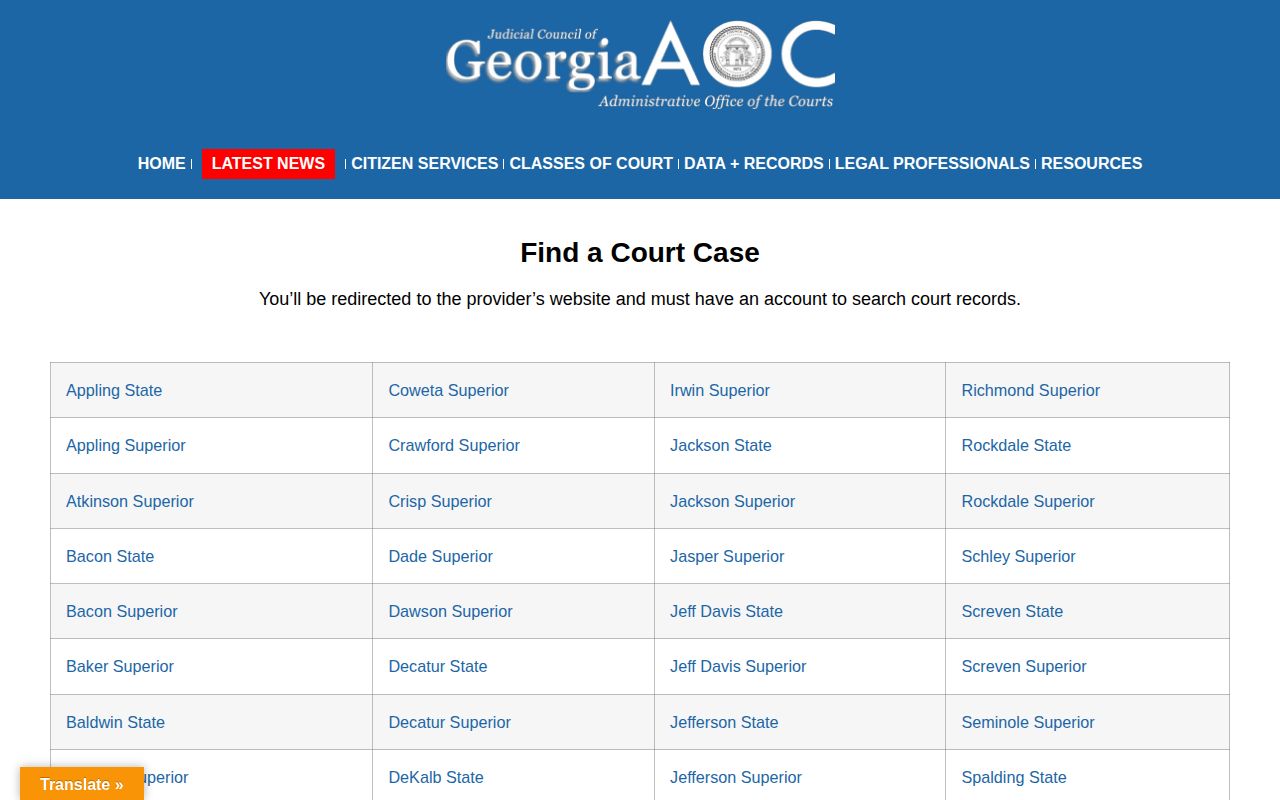
This route becomes especially valuable after an old jail row is no longer easy to locate.
Historical Tattnall Prison Releases
Georgia State Prison remains a strong search term even though the county says it closed on February 19, 2022. Historical releases from that prison do not belong in today's county jail roster. Use GDC offender and open-records channels, parole records, and the sentencing court. Old news or search results may use “Reidsville prison,” so verify the exact institution before interpreting the record.
Tattnall County now identifies two active GDC prisons in the county. That makes the closed prison a historical branch, not a third current facility. A missing current facility entry is expected for a closed institution and is not itself evidence about an individual release.
Tattnall Municipal Release Records
Municipal arrests create another local distinction. Police in Reidsville, Glennville, Collins, Cobbtown, Manassas, or another Tattnall municipality may make the arrest, while the person is then booked into Tattnall County Jail. In that situation, the county inquiry supplies the booking trail, the Sheriff's Office holds the jail release event, and the court of jurisdiction may hold the bond, charge, dismissal, sentence, or other disposition. The arresting agency field helps identify which municipal department began the case.
Not every municipal encounter produces a jail release record. A person who received a citation and was released without county jail booking may appear only in the municipal or state court trail. Searching Current Inmates or Inmates by Arrest Date would not prove or disprove that event because there was no local jail admission to release. Confirm whether booking occurred before requesting a county release sheet.
This distinction also improves an open-records request. Give the arresting department, date, court, case or warrant number, and known booking facts. Ask the sheriff for the custody record only when a jail booking occurred. Ask the clerk or municipal court for the filed case record when the event remained citation-based. Separating arrest, booking, court action, and release prevents one agency's record from being treated as a complete account of the entire case.